Why Ridley Chooses a 360 mm Handlebar
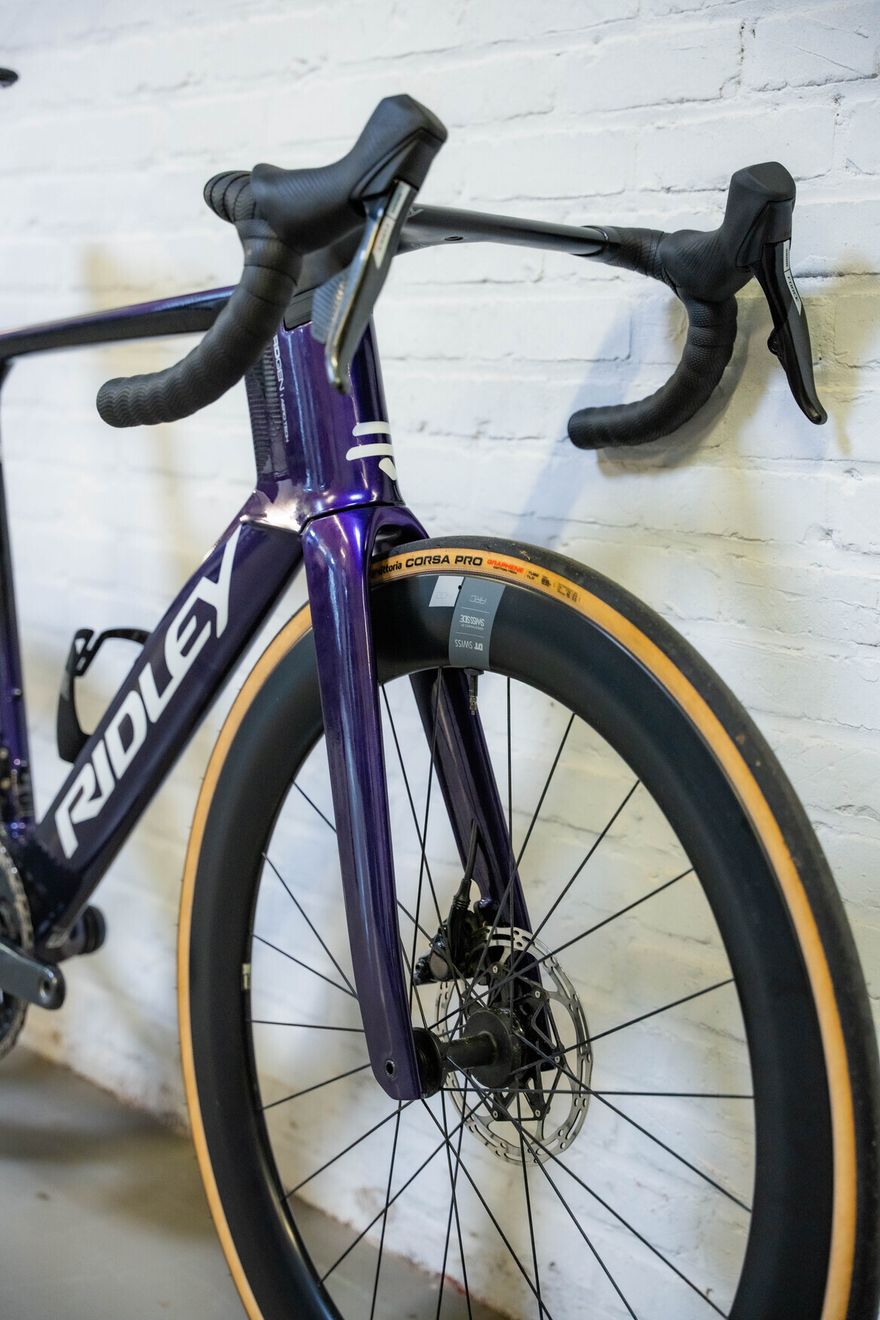
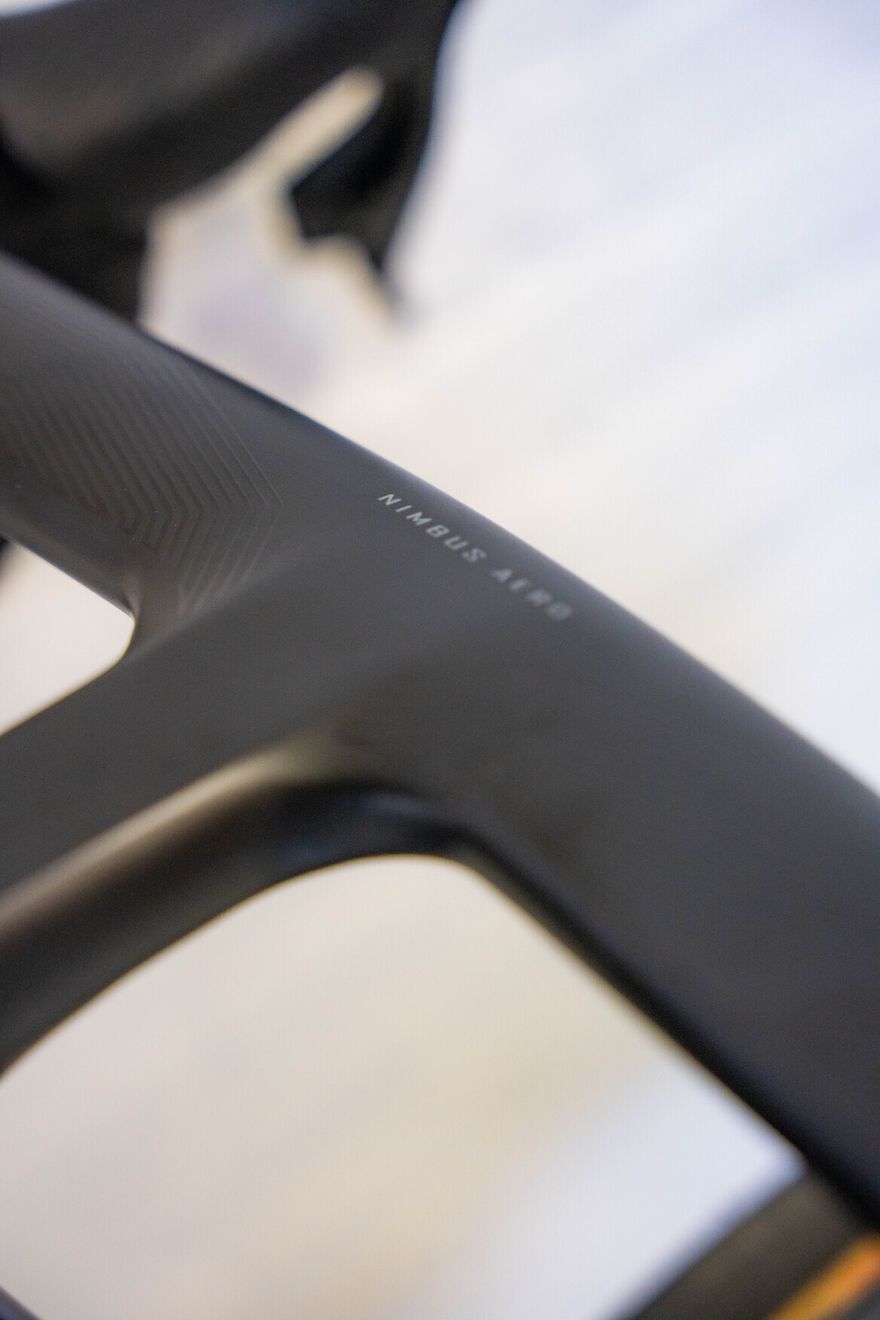
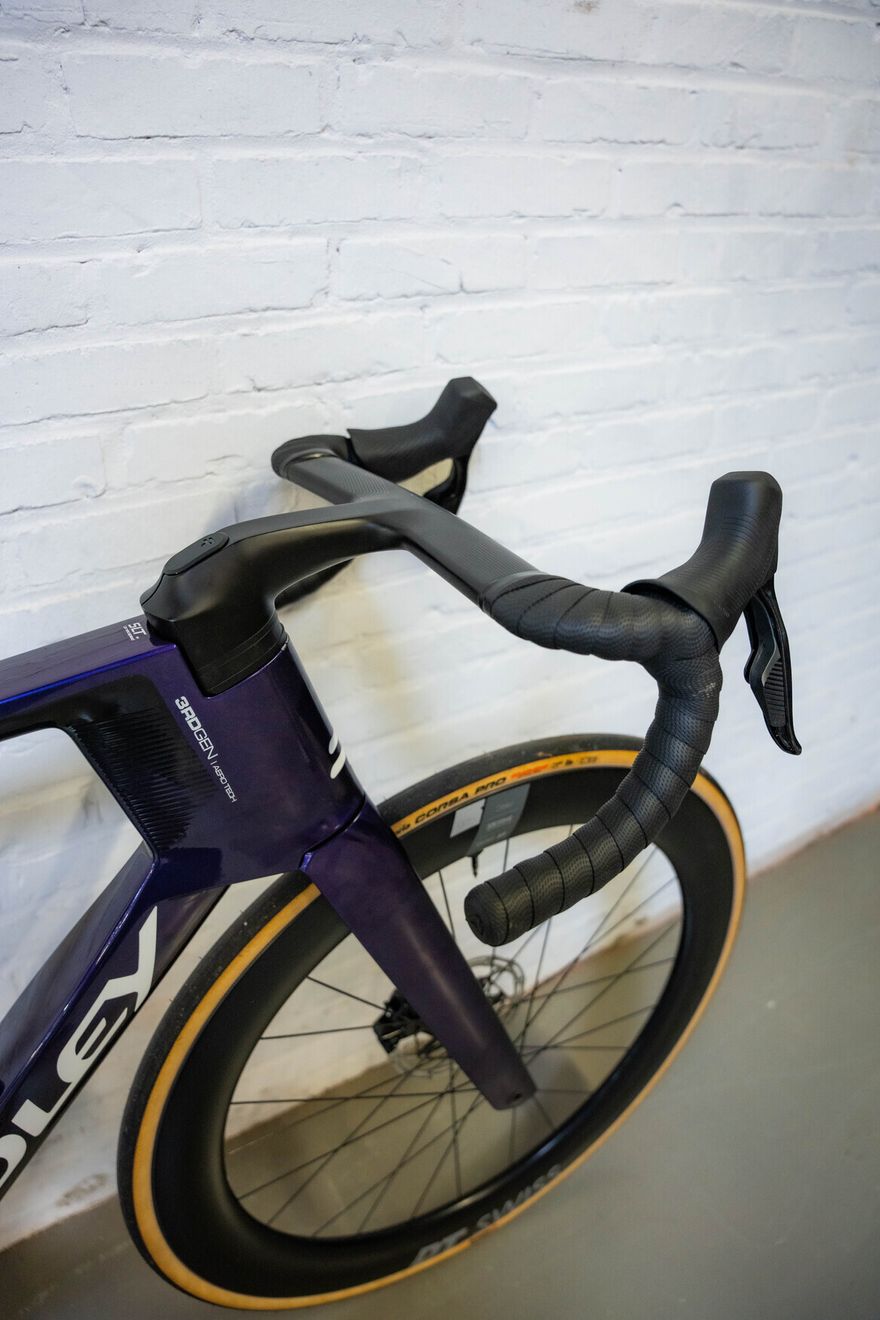
At Ridley, we opt for a Nimbus Aero cockpit on many of our bikes, featuring a width of 360 mm at the hoods and 400 mm at the drops. This is a deliberate choice that reflects the trend in the professional peloton. We spoke to our Senior Product Manager, Bert Kenens, to explain the thinking behind it: “When the pros make a particular choice, it quickly filters down to competitive amateur cyclists these days.”
Not so long ago, a wide handlebar was seen as a symbol of strength in the peloton. With their arms spread wide across the bars, cyclists showed that they had plenty of lung capacity. A wide handlebar also provided leverage during sprints and on cobbled sections. Tom Boonen was a typical example of a rider who followed this philosophy. In his early years, he used a handlebar that was no less than 46 cm wide.
That way of thinking is now outdated. A wider handlebar does not increase your lung capacity. On the contrary, a handlebar measuring 42, 44 or even 46 cm can put you at an aerodynamic disadvantage. In that position, a rider is effectively carrying a parachute, catching a lot of extra wind with their shoulders and chest. That is why handlebars have become progressively narrower in recent years.
Since 1 January 2026, the UCI has also enforced a minimum handlebar width. This is 400 mm, measured from the outer edge to the outer edge at the widest point of the handlebar. In addition, there must be at least 280 mm of space between the inner edges of the shifters. One important detail to understand: the 360 mm measurement of the Nimbus Aero refers to the centre-to-centre distance between the shifters. This is a different measurement method from the one used in the UCI regulation.
Testing it over 1,000 kilometres
Kenens acknowledges the evolution in the peloton. “A narrower handlebar is simply faster. You reduce your frontal area, which is still one of the easiest and most affordable ways to gain speed,” he explains. “Thanks to the flare, you still have enough stability at the widest point of the handlebar when descending or riding at very high speeds.”
Ridley uses the Nimbus Aero cockpit on several models, with a handlebar width of 360 mm at the hoods. “It fits perfectly with the evolution we are seeing in the peloton today. For those who aren't convinced, I recommend giving it a try. And I don't mean just for one ride, but over, say, 1,000 kilometres. You really do get used to it. We see that enthusiasm in 99 out of 100 customers. If they then have to go back to a 42 cm handlebar, it feels like riding a truck. It's simply a matter of getting used to it.”
On the Noah Fast, the 360 mm Nimbus Aero cockpit is the only option. “That makes sense, because the entire Noah Fast has been optimised to go as fast as possible. Every decision is made with speed in mind, including the choice of a narrower handlebar. The same applies to the FALCN RS. On the Kanzo Fast 2.0, you can also choose a 380 mm handlebar in the configurator. And, of course, you can experiment with the rest of the setup too. You can choose a different handlebar, stem or other cockpit options. Our Cirrus handlebar, for example, is available in wider options. But I would encourage everyone to give narrower handlebars a chance. You won't regret it!”