25 mm, 28 mm, 30 mm or wider: how do you choose the ideal tire width for your road bike?
In what we could – with a slight exaggeration – call the prehistoric era of cycling, riders chose tire widths of a maximum of 23 millimeters, usually combined with very high tire pressure. At the time, it was believed these tires offered aerodynamic advantages and were lighter. Most bikes did not even allow wider tires. Only in races such as Paris–Roubaix did special frames appear with tires up to 25 millimeters, which at the beginning of this century was considered a real revolution.
The trend at the beginning of this century is clearly illustrated when we look at the allowed tire clearance of some of our older models. The Fenix Disc (2013–2016), for example, had a maximum tire width of 28 millimeters. When we look at older versions of the Helium SL (2011–2017) or the Noah SL (2016), this was even limited to just 25 millimeters. Today that seems almost unimaginable, but at the time it was completely normal.
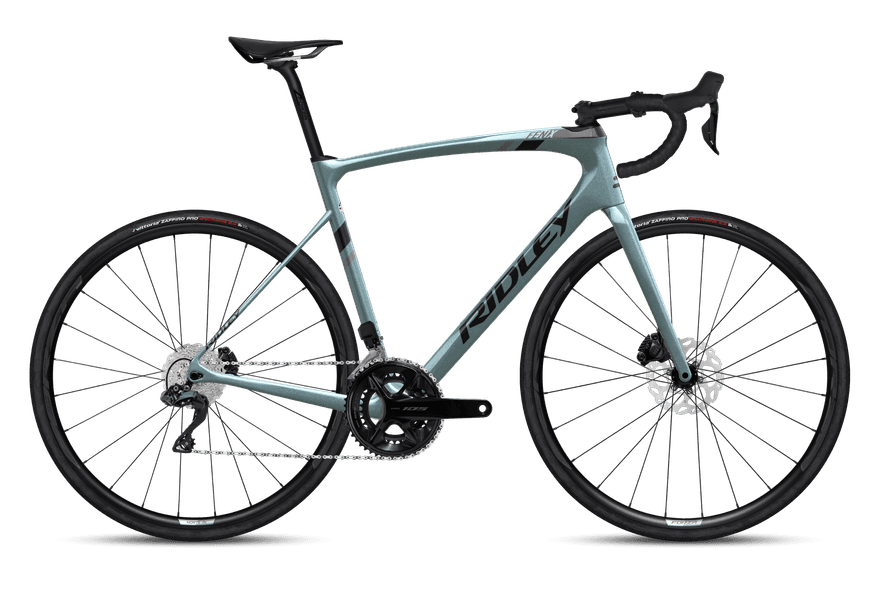
FENIX DISC
High-end endurance bike at a more affordable priceWith this all-round road bike, you’ll be able to tackle anything.
Discover the Fenix DiscWider is faster
In addition, wider tires can be ridden at lower pressure. This allows them to absorb imperfections in the road much better. On cobblestones or gravel roads, this makes a clearly noticeable difference, which is why riders in the Flemish classics have always preferred wider tires.
The cycling world did need some time to adapt to this evolution. Rims had to be adjusted to accommodate wider tires and bikes needed enough clearance to switch to 28 millimeters or wider. This development took several years and is still ongoing. While 28 millimeters was still the norm in 2024, in the past two seasons we have increasingly seen 30 millimeters and even 32 millimeters appear.
At Ridley, we already sensed this trend early on. At the end of 2023, we launched the Falcn RS with a maximum tire clearance of 34 millimeters, which was a significant increase compared to the 28 millimeters of its predecessors. With the Noah Fast, launched in early 2025, we maintained this generous tire clearance. Much to the delight of many of our riders. For example, Uno-X started Paris–Roubaix last year on 32-millimeter tires, a serious advantage that helped Markus Hoelgaard achieve an impressive eighth place.

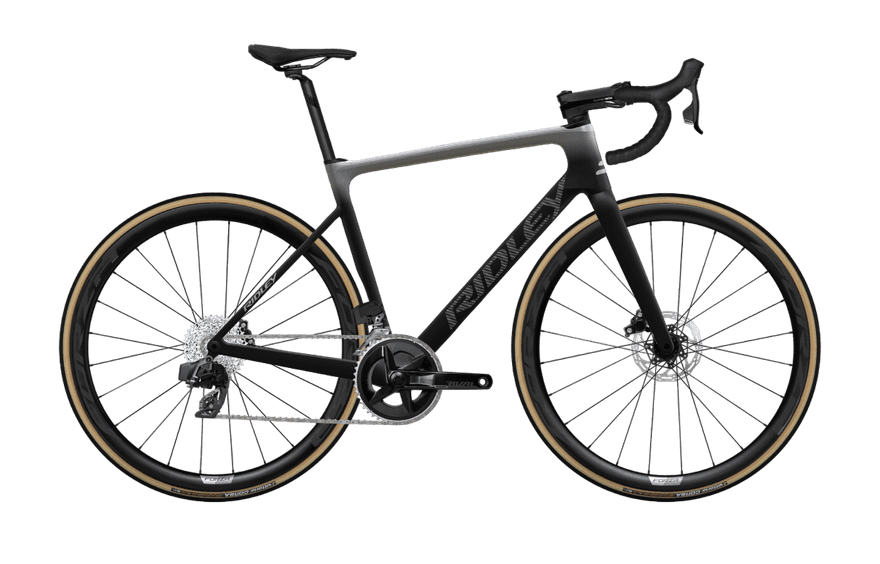
Falcn RS
Licht genoeg voor het klimwerk, stijf genoeg voor de sprintsDe Falcn RS is de ultieme racefiets voor elke renner die zijn grenzen wil verleggen en zijn prestaties naar een hoger niveau wil tillen. Met zijn aero en lichtgewicht carbon frame en responsieve rijgedrag is de Falcn RS klaar voor al je competitieve fietsdoelen. Deze veelzijdige racefiets kan elke wegwedstrijd aan, of het nu een slopende bergetappe is of een klassieke, snelle wegwedstrijd. Het frame is geschikt voor banden tot 34 mm, het lichtgewicht frame van 830 gram helpt je de bergen te bedwingen.
Lees meer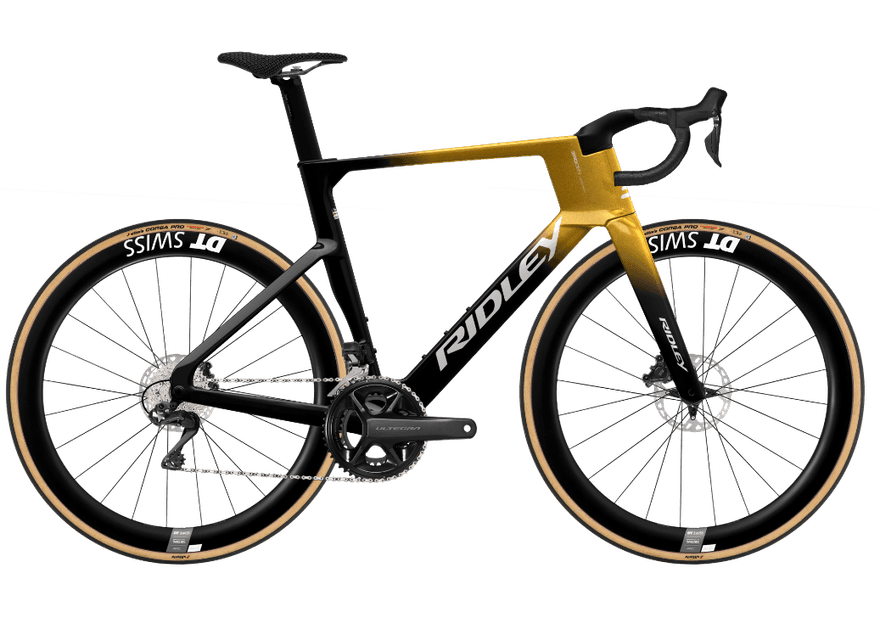
Noah Fast
The fastest bike we’ve ever builtAs of 2025, aerodynamics is everything! That’s why Ridley’s product developers started from a blank sheet for the third generation of the Noah Fast. The result is a 100% aero bike. At a speed of 50 km/h, the Noah Fast is 8.5 watts faster than its predecessor. This underlines that aerodynamics is truly embedded in Ridley’s DNA.
Read more
Looking ahead
The choice is yours
So how do you choose the ideal tire width for your rides? First of all, look at the possibilities of your bike. If it’s possible, there is actually no reason today to go below 28 millimeters. In fact, the norm now seems to have shifted toward 30 millimeters, thanks to lower rolling resistance, more comfort and extra grip.
Do you regularly ride on rougher roads? Is there a cobbled section on your commute or do you have a soft spot for the Flemish classics? Then choosing 32 millimeters is certainly no unnecessary luxury. Riders who like to be pioneers of a new trend might even consider 34 to 38 millimeters. All signs suggest it is only a matter of time before that too becomes standard.
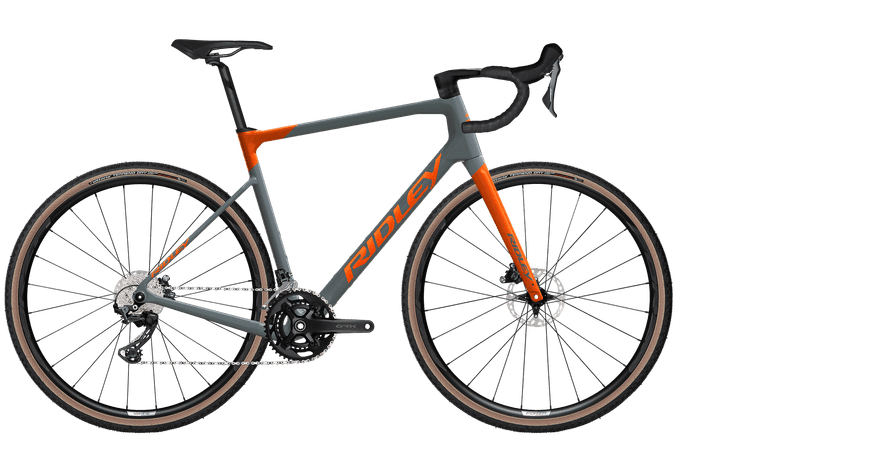
Grifn
All roads, all ridersThis bike is carefully designed for riders searching for that one bike that can do it all.
Discover the Grifn