Head of Product Pieter Potters on the development of the Kanzo Fast 2.0: “This is the ultimate expression of what we can do in gravel racing today”
At first glance, the new Kanzo Fast 2.0 looks like a completely different bike from the original Kanzo Fast. Where did the concept for this design come from?
The Kanzo Fast 2.0 is based on everything we have learned over the past few years from our other gravel platforms. The ASTR RS in particular has given us a lot of insights. With that bike, we already pushed the use of wide tyres and an aggressive gravel geometry quite far. We tested tyres up to 52 millimetres and increasingly experienced the advantages that this offers.
With the Kanzo Fast 2.0, we wanted to combine that with the aerodynamic knowledge we have built up at Ridley through road cycling. The Noah Fast is obviously an important example of that. Gravel races are getting faster and average speeds continue to increase. That makes aerodynamics increasingly relevant in gravel as well.
The challenge was therefore to look at wide tyres, a race-oriented geometry and aerodynamics not as separate elements, but as one complete package.
That combination of wide tyres and aerodynamics also has an impact on the geometry. How did you approach that?
You can't simply design a bike that accommodates 58-millimetre tyres and leave everything else unchanged. A wider tyre has a larger diameter, which also changes the way the bike handles.
That's why we took the ASTR RS as a starting point and adapted it further for the Kanzo Fast. The bottom bracket is lower. Compared to the wheel axles, we are five millimetres lower than on the ASTR RS. That's quite significant. Combined with the larger tyres, this gives you a lower and more central position on the bike. You really sit inside the bike, which provides a lot of stability, especially at high speed.
Half a degree may not sound like much, but it is enough to position you slightly more over the bottom bracket. That helps you pedal more efficiently and makes it easier to adopt an aerodynamic position. That's particularly important during long, intense efforts.
We also adjusted the fork offset to accommodate the larger tyres. With a larger wheel radius, you have to be careful not to make the steering feel too sluggish. By correcting the fork offset, we were able to retain the responsive handling you know from the ASTR RS.
We also managed to retain a short chainstay length. This allows the Kanzo Fast to turn into corners easily and respond quickly to changes in speed. The combination of a lower bottom bracket, steeper seat angle, adjusted fork offset and short chainstays means the Kanzo Fast 2.0 feels both stable and responsive.
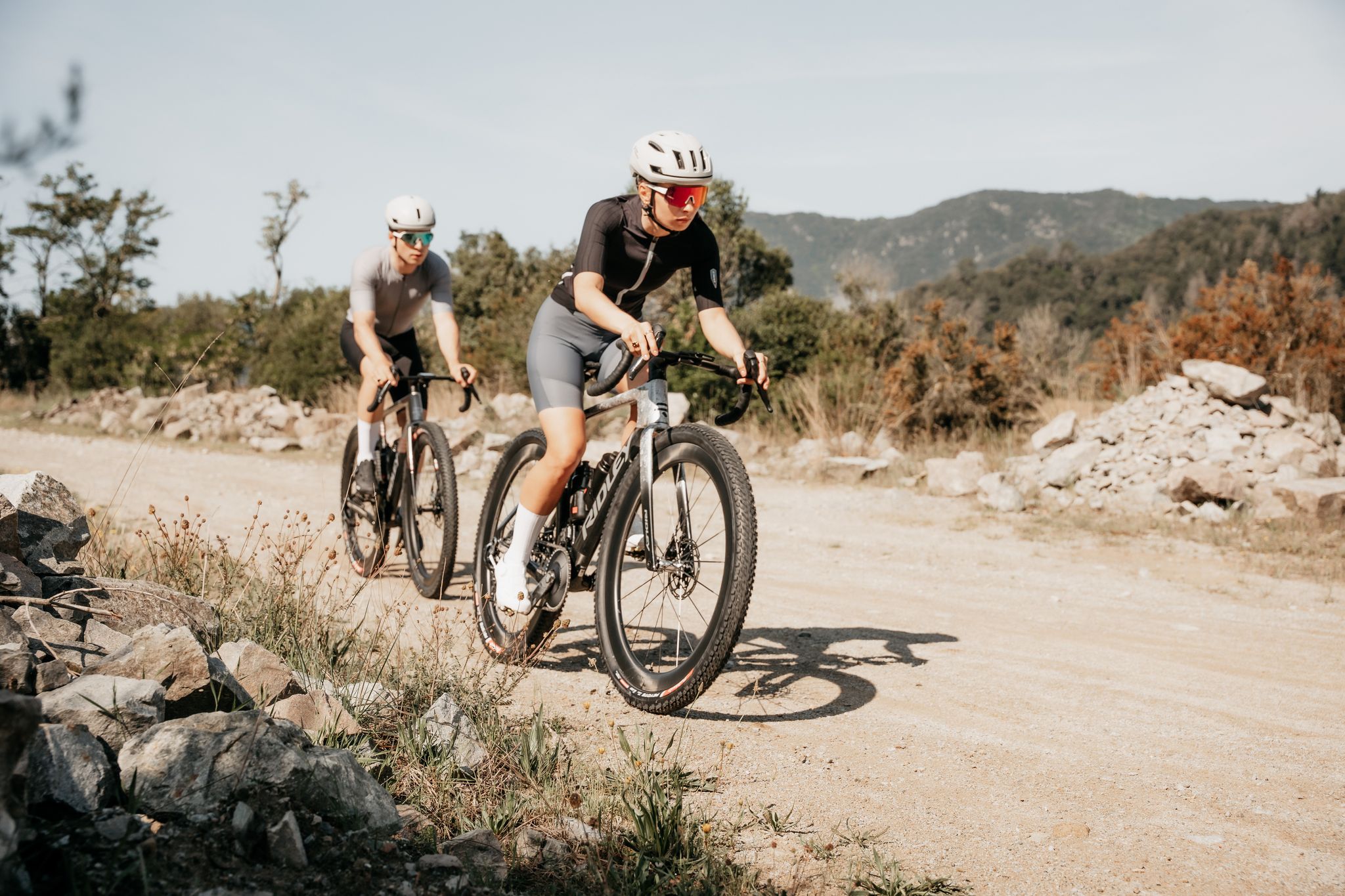
If you put the first Kanzo Fast from 2020 next to this bike, you can really see how much gravel has changed. Six years ago, we were limited to tyres of around 42 to 45 millimetres. Now we can go up to 58 millimetres. That's huge.
But if you create a bike that can handle so much more terrain thanks to those larger tyres, the rest of the bike needs to follow. You have to adapt the geometry, think about aerodynamics and create sufficient stiffness. Our knowledge from road cycling and mountain biking really comes together here.
So is the Kanzo Fast 2.0 still an evolution of the original Kanzo Fast?
For us, this is not simply a new version of the old Kanzo Fast. It is a completely new interpretation of what a gravel racer should be capable of today. The tyre clearance has increased from 42 to 58 millimetres and we completely rethought the race geometry. We have also made major steps forward in terms of aerodynamics. Essentially, we asked ourselves: if we were designing a Kanzo Fast from scratch today, without being limited by the previous generation, what would that bike look like? That's ultimately what became this bike.
58 millimetres sounds extremely wide for a gravel race bike. Is that mainly intended for the toughest races?
Actually, that tyre clearance is there for everyone. Lower rolling resistance, more comfort and a much lower risk of punctures are benefits that every gravel rider can enjoy. For racers, there is the additional advantage that wider tyres allow them to deal better with unexpected situations when riding in a group or overtaking other riders.
We increasingly see 50 millimetres as a kind of minimum standard for modern gravel riding. Personally, I recommend that everyone runs the widest tyres possible. I started riding mountain bike tyres on my ASTR RS in February 2025. Since then, I have never gone back to narrower tyres. That says a lot to me. I believe the future of gravel is about more volume.
58 mm isn’t a limitation; it’s freedom of choice.
Pieter Potters Head of Product BCF
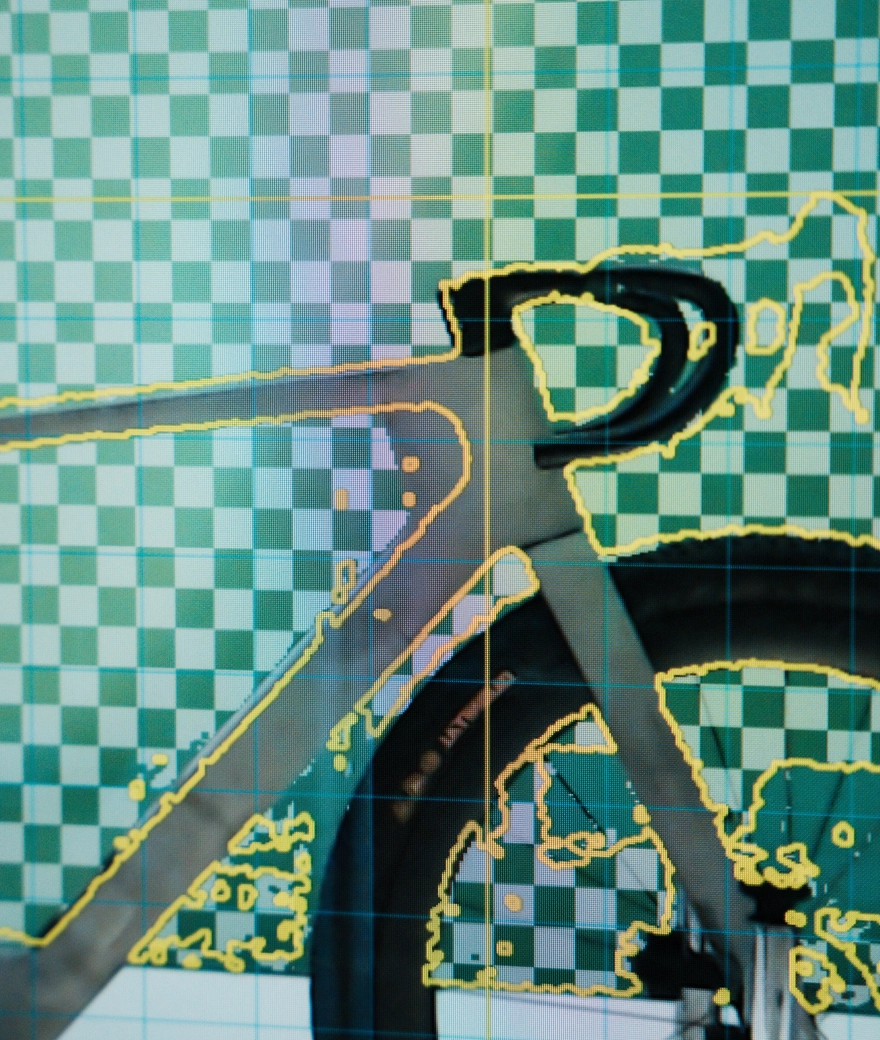
Wide tyres are fantastic on gravel, but you can't ignore their aerodynamic impact. That's why we paid a lot of attention to the aerodynamics of the frame and fork.
The goal wasn't to maximise one single aspect, but to create the fastest overall combination in the real world. You can build an extremely aerodynamic frame, for example, but if that means you can't run wide tyres, you may lose time again on a gravel course. That's why we looked at those two aspects together from the very beginning.
What role did the wind tunnel play in that development?
The wind tunnel results confirmed that we were heading in the right direction. With the same wheels and tyres, the Kanzo Fast 2.0 proved faster than its predecessor in testing, both without and with a rider.
That's important because ultimately, we aren't interested in achieving a nice theoretical aerodynamic figure. We want a bike that is faster in a real gravel race.
The Kanzo Fast 2.0 was clearly developed with racing in mind. But you have also added practical features, such as integrated storage. Why?
A gravel race can last ten hours or more. In that situation, you don't just want a fast bike; you also want a bike that allows you to carry your equipment efficiently. That's why we designed the internal storage, for example, in a way that keeps the centre of gravity low. There are also mounting points on top of the frame for a top tube bag that comes with the bike. The bike also features an integrated chainguide and can be equipped with a specific mudguard system.
All of that is part of the same idea: you don't just need to be able to ride fast, you also need to be prepared for whatever a long gravel race throws at you.
You talk about a bike that needs to be both fast and versatile. Was that a goal from the very beginning?
Absolutely. We didn't want to create a bike that only works well on one particular type of gravel course. You have races with fast, relatively flat gravel roads, but also races with rough sections, steep climbs and technical descents. With 58-millimetre tyre clearance, you have a lot of freedom to adapt the bike to the terrain and to your own preferences.
When you put everything together, what is the essence of the Kanzo Fast 2.0 for you?
For me, this is the logical evolution of what we have been doing with gravel at Ridley for years. With the Kanzo Adventure, we learned how to make a bike stable and capable on demanding terrain. With the ASTR RS, we made that concept more aggressive and sharper. And now, with the knowledge from road cycling, we are adding the aerodynamics.
The result is a bike that can handle a huge variety of terrain. From fast gravel roads to rough sections. I rode the Traka on it myself and, on the descents, you never feel like you have to search for one particular line. You can choose your own line.